
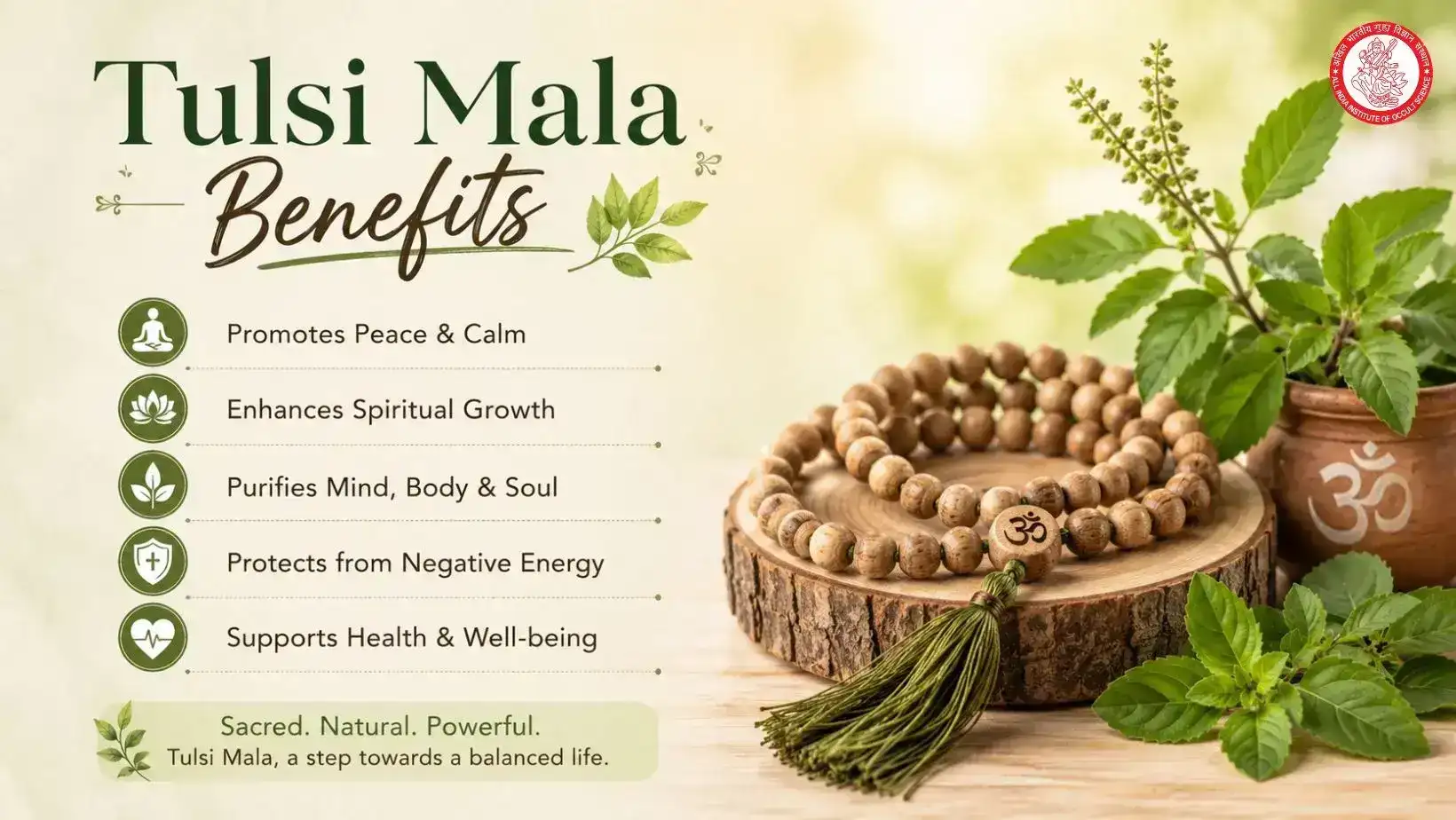
Have you ever wondered why so many people wear a Tulsi Mala around their neck or use it during meditation? Is it just a religious tradition, or is there something more to it?
For centuries, the Tulsi Mala has held a special place in Indian culture and spirituality. Many people believe it brings peace, positivity, and a deeper connection with the divine. Whether you've seen saints wearing it, received one from a temple, or are simply curious about its significance, understanding the Tulsi Mala benefits can help you appreciate why it continues to be cherished across generations.
What Is a Tulsi Mala?
A Tulsi Mala is a rosary made from the wood of the Tulsi (Holy Basil) plant, a sacred herb in Hindu tradition. Tulsi is closely associated with devotion to Lord Vishnu and Lord Krishna, and wearing a Tulsi Mala is considered an expression of faith and spiritual commitment.
Apart from its religious importance, many people also use it during meditation and mantra chanting to improve focus and mindfulness.
Traditional Tulsi Mala Benefits
According to traditional Hindu beliefs, wearing a Tulsi Mala offers several spiritual benefits:
1. Encourages Spiritual Growth
Many devotees believe that wearing a Tulsi Mala strengthens their spiritual practice and helps them remain focused during prayer, meditation, and chanting.
2. Promotes Inner Peace
People often report feeling calmer and more centered while wearing or using a Tulsi Mala during meditation. While this experience is personal, meditation itself has been widely studied for its positive effects on relaxation and stress management.
3. Symbol of Devotion
A Tulsi Mala serves as a reminder of one's faith and values. For many, wearing it inspires compassion, humility, and mindful living.
4. Used for Mantra Chanting
Tulsi Malas are commonly used to count repetitions while chanting mantras. This practice can improve concentration and create a consistent meditation routine.
Are There Health Benefits?
Traditional beliefs sometimes claim that Tulsi Mala offers physical health benefits. However, there is no scientific evidence that simply wearing a Tulsi Mala can cure diseases or treat medical conditions.
The Tulsi plant itself has been researched for certain medicinal properties when consumed appropriately, but these findings do not apply to wearing beads made from its wood.
The relaxation people experience while using a Tulsi Mala is more likely connected to meditation, mindful breathing, and spiritual practice rather than the beads themselves.
How to Wear a Tulsi Mala
If you choose to wear a Tulsi Mala, many traditions recommend treating it with respect.
Some common practices include:
-
Wear it with clean hands.
-
Use it during meditation or mantra chanting.
-
Store it in a clean place when not in use.
-
Handle it gently, as Tulsi wood is delicate.
Practices vary among traditions, so individuals may follow different customs based on their beliefs.
Who Can Wear a Tulsi Mala?
Anyone who wishes to embrace its spiritual or cultural significance can wear a Tulsi Mala. Some people wear it daily as a symbol of devotion, while others use it only during prayer or meditation.
Ultimately, the meaning of the Tulsi Mala comes from the intention and practice of the person wearing it.
Final Thoughts
The Tulsi Mala benefits are deeply rooted in tradition, faith, and mindfulness. While scientific evidence does not support supernatural or medical claims about wearing the beads, many people find that the Tulsi Mala serves as a meaningful symbol of devotion and a helpful companion during meditation and spiritual practice.
Whether you wear it for religious reasons, personal reflection, or as part of your meditation routine, a Tulsi Mala continues to represent peace, discipline, and a timeless spiritual heritage.
Frequently Asked Questions
1. What is a Tulsi Mala used for?
It is traditionally used for prayer, mantra chanting, meditation, and as a symbol of devotion.
2. Can anyone wear a Tulsi Mala?
Yes. Many people wear it as part of their spiritual or cultural practice.
3. Does wearing a Tulsi Mala improve health?
There is no scientific evidence that wearing a Tulsi Mala provides direct health benefits. Any sense of well-being is more likely associated with meditation and mindfulness practices.
4. How should I care for a Tulsi Mala?
Keep it clean, store it in a dry place, and handle it gently to preserve the natural wood.